Succulents manifest a significant variation in shape, color, and form. They are perhaps the most beautiful plants you will ever encounter. Melting your hearts with some excellent variegation or gorgeous rosettes, succulents can add so much more to a space. Crested succulents are a unique variety, and people don’t know much about them. Today, let us decode everything about crested succulents and know about them in great detail.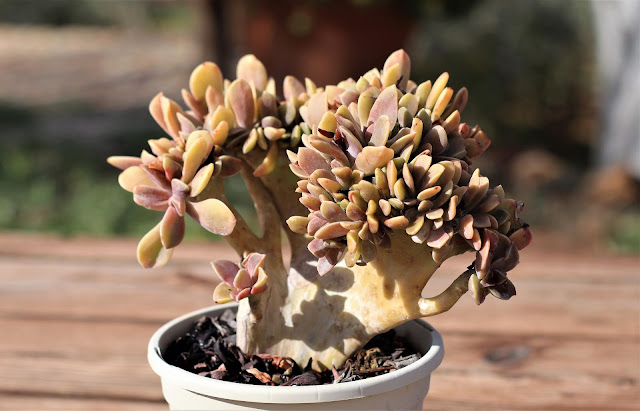

What are Crested Succulents?
Crested succulents are a typical succulent variety resulting from a genetic abnormality in succulent plants. It usually occurs when the apical meristem of a succulent undergoes some genetic defect. Usually, the apical meristems found in plants' shoots and root tips bear the growth points. The same applies to succulents. In certain cases of a genetic abnormality or physical damage to the plants, there arise numerous growth points in the plant instead of the singular growth point of the root and shoot tips.
In such a condition, the succulent starts growing in a crested format. If multiple growth points arise in a plant, it will no longer elongate as a single rosette but instead attain a crested form. In the crested form, the multiple rosettes crowd in one place and push against each other. The growth space is compromised because of too many growing points. The succulents attain different curved formats due to space crunch. You can observe various twisted, curved, and unique shapes in the crested succulents. The physical appearance of a crested succulent thus looks entirely different from regular succulents.
The mutation which causes Crested Succulent is called cristate. The innumerable leaves that grow out make the succulent outlook totally different from its regular shape. The leaves crowd in every possible direction. Sometimes they cascade downwards, while sometimes, they move in horizontal directions. The meristem mutation causes the succulent to attain this particular form, but it looks stunning even with the mutation.
Can Crested Succulents Revert to Normal Conditions?
One of the most common questions regarding crested succulents is whether - they can gain back their normal condition or not. Here you got to understand something. A crested succulent is stunning. The cause may be an abnormality, but the appearance is simply pretty. Many people don’t even want to gain back their previous regular appearance. When the crested succulents start getting even more crowded, the bunch of rosettes look amazing. This phase of the massive crowdedness of the crested rosettes in any succulent is defasciation.
How to Care Better for Crested Succulents?
You must have understood by now that crested succulents differ from normal succulents. The care regime will also be different. The first thing to understand is that - The crested condition is an abnormality. They are much more sensitive than normal or regular succulents. If the crested succulents do not get the gentle care and pamper they need, it could badly impact their health.
Types of Crested Succulents
There are various types of popular crested succulents. You can easily grow them at home just with some greater attention than usual. Here are the most common and famous types of crested succulents available:
1. Coral Cactus
The scientific name of the species is Euphorbia Lactea Cristata. It is an incredibly gorgeous crested succulent that spreads out like flapping wings. It reaches almost 25 inches in width and 36inches in height. It is a winter dormant plant and very easy to grow. Coral cacti and all other succulents can survive in low water conditions. It is a pest-free, low-maintenance plant that can easily decorate a vacant space.
2. Crested Aeonium Sunburst
This crested succulent has three leaf variations -green, yellow, and white. It often develops red edges with flat stems and leaves. The flattened roasts give it a full coverage appearance. These are non-poisonous and summer dormant plants. You cannot grow them properly in tropical countries because most of the year, the summer heat prevails.
3. Crested Cubic Forest Echeveria
The unique color of this crested succulent is an ideal modern art decor for your space. The frosted lavender hue of this crested succulent is pretty gorgeous. The conspicuous leaves are 10 inches in diameter, and the plant can grow up to 8 inches. This is a winter dormant succulent, and you can grow them with the least maintenance.
Crested succulents are a marvel of nature. An abnormal mutation resulting in a beautiful plant is nothing but a natural miracle. Crested succulents can add a silver lining to the natural decor of your space. You need to be more careful with the growth requirements of these sensitive succulents.
Happy Planting!!
Comments
Post a Comment