When decorating your space with some plants, succulents can be a fantastic choice. Succulents have made a great entry as houseplants and are prettier than most common plant species. Succulents are also people’s favorites because they need minimum care and look the prettiest. When talking about succulents, many people presume that green is the only color they exist in. To your surprise, succulents exist in multiple shades and hues like purple. Purple succulents are exclusive and gorgeous. They can add fantastic beauty to your space.
What are Purple Succulents?
They are a remarkable variety of succulents with purple leaves. The purple succulents most manifest their color on being exposed to sunlight. This is because purple succulents appear purple due to a pigment called anthocyanin. This pigment absorbs the yellow and green light of the sunlight spectrum and opens up its true colors, making the purple succulents look brighter. In terms of character, purple succulents are almost similar to other succulents.
Types of Purple Succulents
- Royal Flush - The scientific name of this plant is Pleiospilos nelii. It is a small succulent that grows to a height of almost 3 inches and attains a width of almost 4 inches. The plant bears 3 to 4 leaves at the maxim, centered around the main node. The royal purple colors of the leaves are gorgeous. The plant bears certain pink and white flowers.

- Purple Flush - Purple flush or Ruby necklace succulent Known by the scientific name Senecio Herreanus, this cute little purple succulent is best suited for hanging pots. The other common name for this succulent is a string of beads because the oval-shaped leaves appear as intense. In this plant, the leaves are green, while the main stem is purple in color. The succulent bear has clear white flowers that add to its beauty.

- Purple Pearl - The scientific name of the Purple pearl Echeveria. This is one of the most tolerant succulent species. The shape of the succulent resembles a fully bloomed rose. The purple pearl plant bears diverse hues of purple in its leaves. This is a light shade-loving plant, and loves to enjoy dispersed low sunlight instead of full glares. It needs well-drained, moist soil for better growth. Echeveria bears pink flowers.

- Purple Moon Cactus: This is the common purple cacti you see around. Also identified with its scientific name that is Gymnocalycium, it looks marvelous. This one is a native South American species but is now popular across the globe due to its unmatched beauty. The plant grows up to 6 inches in height, and you can easily care for it. The best part is the easy propagation of the plant. You can grow Purple Moon Cactus by propagating the offsets. They bear soft thorns that make the look even more enchanting.

- Purple Rose - Purple rose is also spelled as Aeonium and it is a widespread plant species. The leaves of the succulent look like the petals of a full-bloomed rose. The petals are dark purple in color, often confused with black color. The high concentration of anthocyanin is responsible for the dark colors. The dark purple leaf rosettes grow best when placed in full sun conditions. They grow around 2-3 feet in height. It is a tolerant species. The purple color gets intense with the increasing glare of the sun.

- Purple Beauty - The scientific name of this plant is Sempervivum. This is a very tiny succulent. It is ideal or keeping it indoors at the center table or corner tables of your room. The plant has purple centers and blue-green colored leaves growing around it. The rosette-shaped leaves grow up to 6 inches in width. This is another sunlight-loving succulent. Their growth is best when placed in direct sunlight.

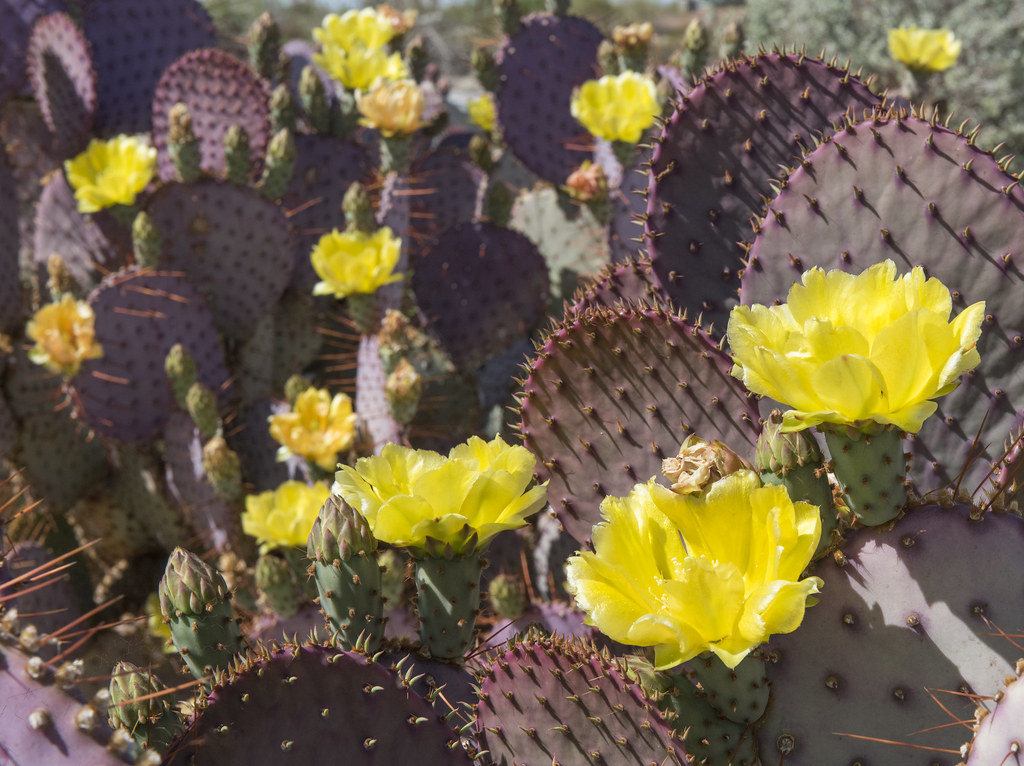
- Violet Prickly Pear - If you are looking for some exotic cacti species for an Instagram photo dumping session, choose this succulent. Opuntia violaceous can be aptly called the queen of purple succulents because it is mystically gorgeous. The plant's color is not bright purple but a shade of lavender or a very light milk chocolate color. The spiny prickly pear grows up to 2 feet tall and 2 feet wide. They bear dark purple or brown spines and loom heavenly. Sometimes, tinges of other color shades like oink or brown can also be observed, adding to its charm.

- Rainbow Hedgehog- The scientific name of the succulent is Echinocereus pectinatus. It is known for its unique shape and bright large pink flowers. It is a total beauty to add to any garden space. The beautiful oval dome shape of the purp;e succulent is unique. But what attracts greater attention is the large bright pink flowers. It grows up to 14 inches tall and five inches wide.

- Rubia - Lithops Optica is the scientific name of the species. If you like succulents with unique shapes, this one can be a great choice. It bears pebble-shaped leaves, which are light to moderate purple in color. They produce beautiful daisy-like flowers in creamy white houses. The leaves are thick and short, and so is the stem. The leaves are not totally visible till the plant grows completely. It is a tiny succulent that grows up to 1 inch in height.

- Purple Giant - The botanical name of the species is Anacampseros Retusa. It is a perennial succulent variety with exotic purple rosettes. The leaves are a combination of dark purple and green. It grows big and bears white flowers. The shape and color are unique. You can add it to your indoor space for greater beauty.






Comments
Post a Comment