Whether you are an experienced gardener or someone who admires nature or maybe both, you might have heard about Black succulent plants at least once in your lifetime. Even if you are reading about them for the first time, alright, we have got you covered!
You
cannot call your garden area a complete one unless you have grown a succulent
there.
They may look black but are actually not black. They are the deeper version of purple, maroon, and burgundy, making them appear black. These black beauties are also famous as 'goth'. You can find them in different shapes, sizes, and shades and pick them as per your home decor. What's good is, that they don't demand extra care or attention like regular plants. Place them in sunlight, and watering once a week does excellent for them. There's no surprise why people are getting crazy for these plants and Instagram is flooded with their pics.
If you want to enhance your home decor or thinking to spice up Halloween photos, it's time to bring succulents home! Let's check the benefits of these little plants.
Benefits
of Succulent plants
- They give a
spooky look to your Halloween decoration.
- Like any
plant, succulents have the tendency to purify the air and improve the
humidity of the surroundings.
- They have
beautiful dark hues that can enhance the canvas of a house.
- Succulents continuously emit oxygen which freshens the air. This is impossible for regular plants as they release carbon dioxide at night.
Now you are convinced that keeping succulents at home is beneficial from all sides. Hence, learn about the best five black succulents that exist.
1.
Aeonium arboreum ‘Zwarktop’

Growth
Requirements
- Keep it under
the full sun for getting the deepest hue.
- You can water
it once a week during fall and once a month in winter.
- Ensure the
soil under the plant is porous so water can drain.
- After 2 or 3
years, the plant gets bigger. Then you need to shift it to another
pot.
- Spray neem oil or any insecticidal when aphids and mealybugs come.
2.
Black Hens and Chicks
The black hens and chicks plant is actually not a
black plant but deep purple in color. Thus, it looks close to that black. The
center of the roses is green, while the leaves are broad and burgundy. What
makes it unique is its rough and hardy nature. It can survive well in
poor conditions like nutrient-less soil or drought. If you have infertile soil
at your place, you can still grow these beautiful rosettes. Therefore, they are
also called 'low maintenance' plants. This succulent is monocarpic, which means
it dies after blooming. However, the offset growth is so quick that it becomes
hard to notice the dying rosettes.

Growth
Requirements
- It also
requires full sun or partial shade to grow.
- Watering only
once a week is enough. After you're done, make sure the soil is not soggy,
and the rosettes are not wet.
- The soil
should be well-draining or can be a cactus mix.
- This little
plant is susceptible to aphids, mealybugs, and other insects, so protect
them well.
3.
Echeveria ‘Black Prince’
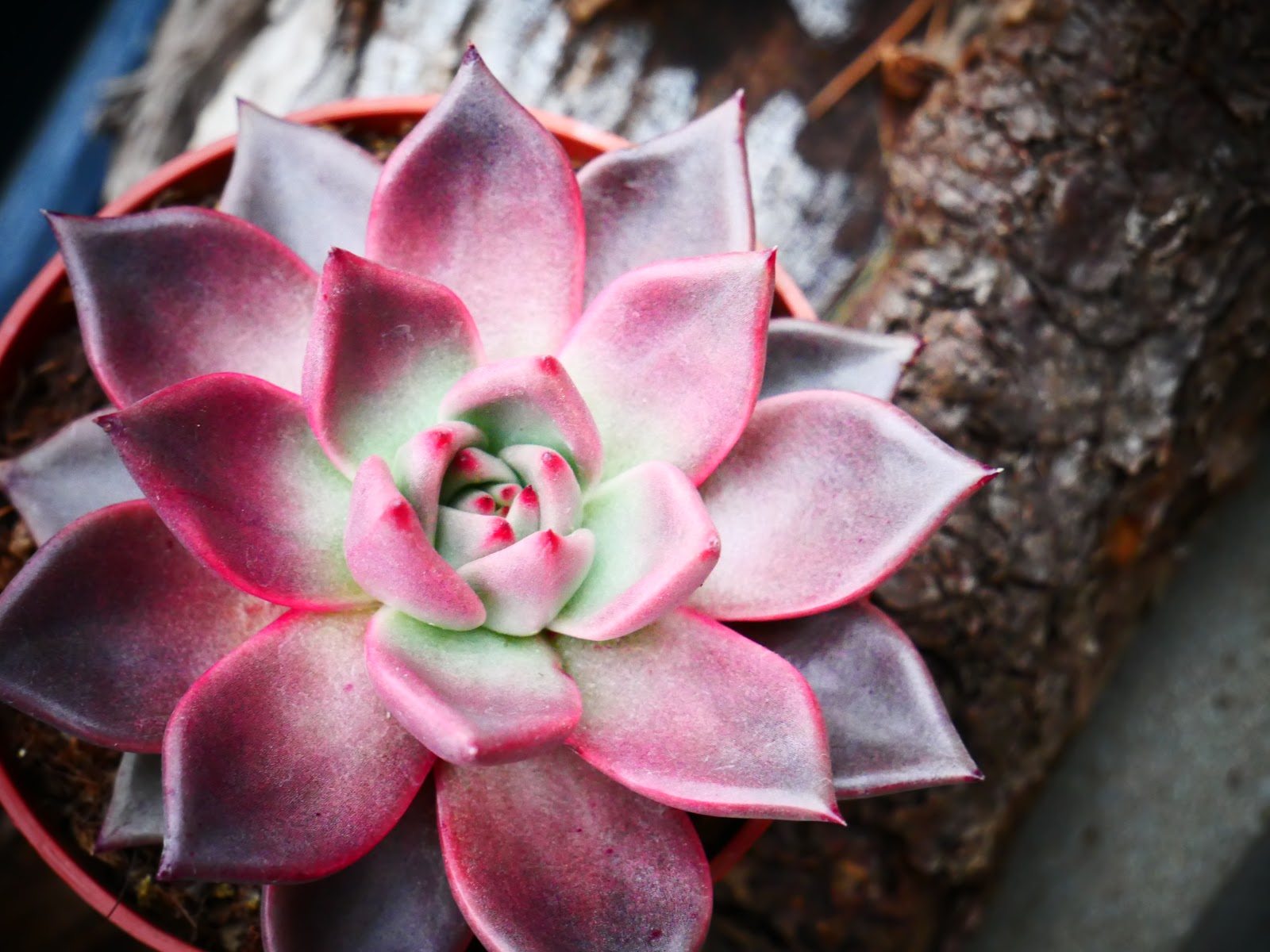
Fat and purple leaves that look black from a distance are sign of Echeveria ‘Black Prince’. It creates beautiful roses spread up to 3 inches in width. During colder months, the succulent produces coral red blooms, which look beautiful in contrast with black leaves. The leaves are somewhat pointed and appear greener initially. Later, the leaves get darker according to the amount of sunlight they are exposed to.
Growth
Requirements
- Don't keep
them open in direct sunlight on extremely hot days, as this will cause
sunburn.
- Choose a warm
spot near the window to keep them.
- Black Prince
requires water very rarely. Hence, water them only when you see the soil
dry.
- The plant
propagates from the leaf, offset and stem regions, so trimming and
maintaining these regions is necessary.
- You need to
re-pot only when the plant outgrows the existing pot, which takes more
than a year.
4. Sinocrassula yunnanensis ‘Chinese Jade’
If you are searching for a unique succulent, then Chinese Jade is the one. It looks like a hedgehog owing to its clustered, sharp leaves covered with hairs. In the initial stage, it looks like a mixture of dark green and purple but turns black with prolonged sunlight exposure. The rosette looks extremely beautiful due to its tiny leaves and grows hardly around 1.5 inches in diameter. The growth of this plant is rapid.
Although this goth is beautiful enough to impress your guests, it is not suitable for your pets. It is highly toxic, so keep your little pets away from it.
Growth
Requirements
- Keep it under
the partial sunshade.
- Check if the
soil under the plant has completely dried, and then only water it.
- After 2 to 3
years, change the pot.
- Soil should
be porous such that water can't be stored.
- These Jade
plants may catch some fungal diseases, so use insecticides.
5. Sedum 'Chocolate Drop'
As the name suggests, this succulent plant has dark brown leaves having teardrop shapes. Thus, they look like chocolate drops. The leaves are also glossy, making them appear attractive throughout the season. During summers, this plant produces soft and star-shaped rosy flowers. This deciduous succulent grows to 10 inches tall and 14 to 20 inches broad at max. It grows in an upward direction, forming thick and fleshy foliage.
Growth
Requirements
- It grows well
in full sun.
- Keep the soil
well-drained so that it retains minimum moisture.
- Beautiful
flowers attract hummingbirds, butterflies, and bees.
- It looks good
throughout the season.
- These plants are resistant to drought, heat, and disease.
Comments
Post a Comment